Getting Glass Annealing Right: Why Precision Matters
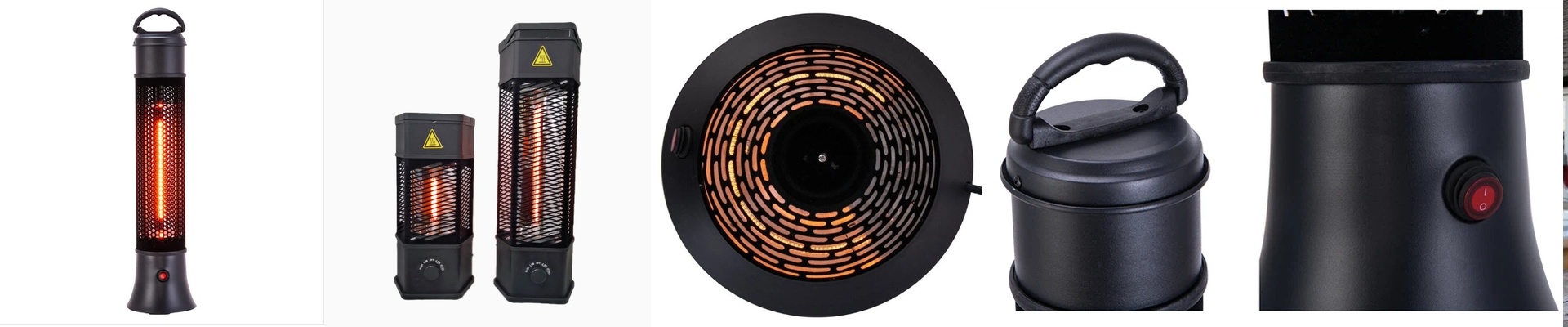
There is nothing worse than spending hours on a piece of lab glassware only to have it spontaneously shatter. It’s frustrating. It’s a waste of time. And usually, it happens because of internal stress that didn’t get cleared out. If your heating ramp is off by just a couple of degrees, you’re basically baking microscopic tension right into the glass. Then, the moment you hit it with a vacuum or a sudden temperature shift—crack. To stop that from happening, we use high-precision infrared (IR) elements. We keep things locked in with a 0.1°C tolerance during the soak. It sounds obsessive, but it works. The trick to stress control The goal is to hit that sweet spot—the annealing point. This is where the glass is just soft enough for the internal stresses to relax, but not so soft that your flask turns into a puddle. A swing of a single degree can be the difference between a perfect piece of equipment and a pile of scrap. We get that 0.1°C stability by pairing short-wave IR emitters with high-frequency PID controllers. The best part? IR heating is direct. It doesn’t waste time heating up the air first. No lag, no waiting around for the oven to “catch up.” Don’t just blast it with heat It’s tempting to just crank the heat to get it over with, but that’s a mistake. If you heat it too fast, the outside of the glass gets hot while the core stays cool. Now you’ve just created new stresses while trying to get rid of the old ones. We set up our IR arrays to wrap the vessel in a uniform glow of radiant heat. Everything warms up together. The real-world trade-offs Look, this kind of precision isn’t cheap. To keep that 0.1°C accuracy, you need high-stability power supplies and thermocouples that are actually calibrated. Then there’s the “heat sink” problem. If you set your glass on a metal rack, that metal is going to suck the heat right out of the contact point. You’ll end up with a cold spot, and you’re back to square one. Use ceramic supports or some heavy insulation to keep the temperature flat across the whole piece. One last tip: put these systems on their own dedicated circuit. You don’t want a voltage flicker from some other piece of equipment throwing your PID loop off and ruining your batch.