

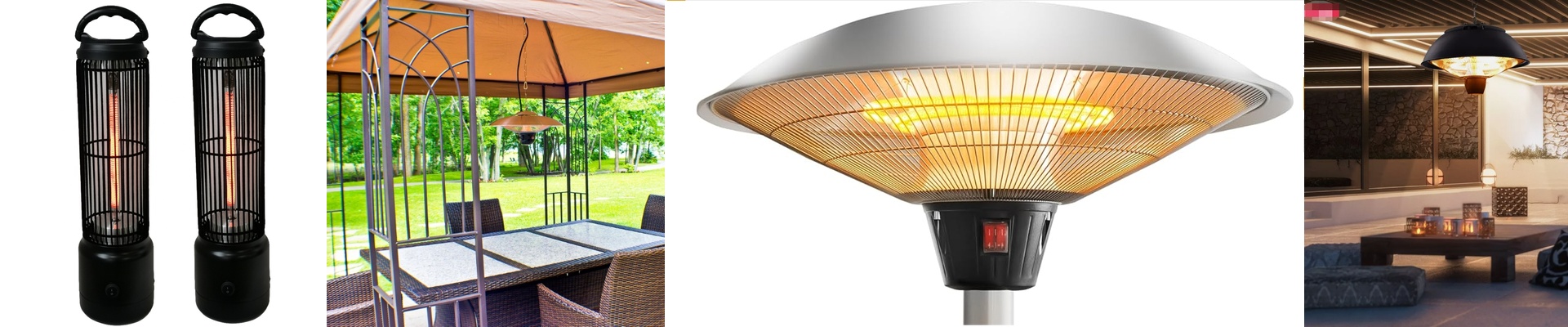



In an off-grid home, keeping an elderly room warm in winter isn’t comfort—it’s safety. Once the sun drops, the house cools fast, and a conventional heater can drain the battery bank before morning. An infrared space heater changes the equation because it delivers radiant warmth straight to people and surfaces, not to the air.
What matters, technically
We’re talking about an electric infrared heater built around a quartz tube or a carbon fiber element, kicking out instant, directional heat. Typical units run 800–1,500 W on standard 120 V circuits, and many include a built-in thermostat plus the basics—tip-over protection. The payoff is point-of-use efficiency: infrared warmth feels substantial even when ambient temps are low because it heats the body and nearby objects. That means you can hold the room comfortable at a lower average draw than a forced-air setup.
Why it fits off-grid
Paired with a solar photovoltaic system, this approach supports energy independence. By day, the PV array charges the battery bank; after dark, the infrared heater pulls power without fuel deliveries or a generator. In practice, an 800–1,000 W infrared heater used 3–4 hours each night in a well-insulated elderly room can hit roughly 2.5–4 kWh per day. That’s a manageable load for a typical off-grid battery bank and inverter—so you can keep the room warm without the constant racket and refueling runs of a generator.
Here’s what to keep straight
Solar compatibility comes down to battery capacity and inverter rating, not just the heater itself. For solid winter performance, size the battery bank to cover the heater plus essential lighting and small appliances. And infrared warmth works best when the unit has a clear line of sight to the occupant, so placement matters—don’t block it with furniture.